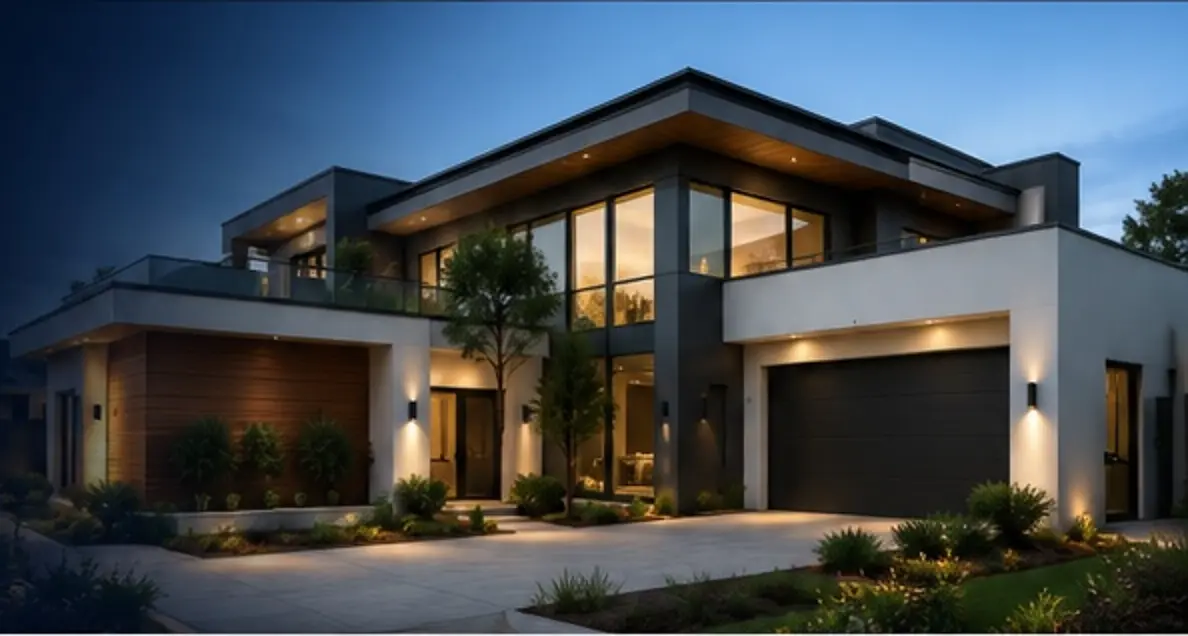
The practical answer.
Choose an exterior colour as part of the entire property—not as an isolated swatch. The roof, paving, stone, boundary walls, neighbouring buildings and changing daylight all affect how the final colour reads.
Step by step
What to do
Start with fixed elements
List the colours that are expensive or impractical to change, including the roof, face brick, paving, window frames, stone and garage doors.
Choose a colour direction
Decide whether the building should feel warm, cool, light, grounded or high-contrast. Eliminate colours that fight the fixed materials.
Consider exposure
Direct sun, shade and reflected light change colour throughout the day. Large exterior surfaces may appear lighter or stronger than a small sample.
Test a useful sample
Apply a proper sample on more than one wall if possible. A tiny colour chip is not enough to judge a full façade.
Check morning and afternoon
Review the sample in bright sun, shade and late-day light. Also check it beside the roof and paving.
Plan the complete palette
Confirm the main wall, trim, feature and boundary-wall colours together so the property reads as one considered scheme.
Before you paint
Checklist
- Roof colour considered
- Paving and brick considered
- Samples tested on the wall
- Morning and afternoon light checked
- Trim colour confirmed
- Physical sample approved
Avoid these
Common mistakes
- Choosing from a phone screen alone
- Testing only inside the building
- Ignoring roof and paving undertones
- Selecting too many competing feature colours